
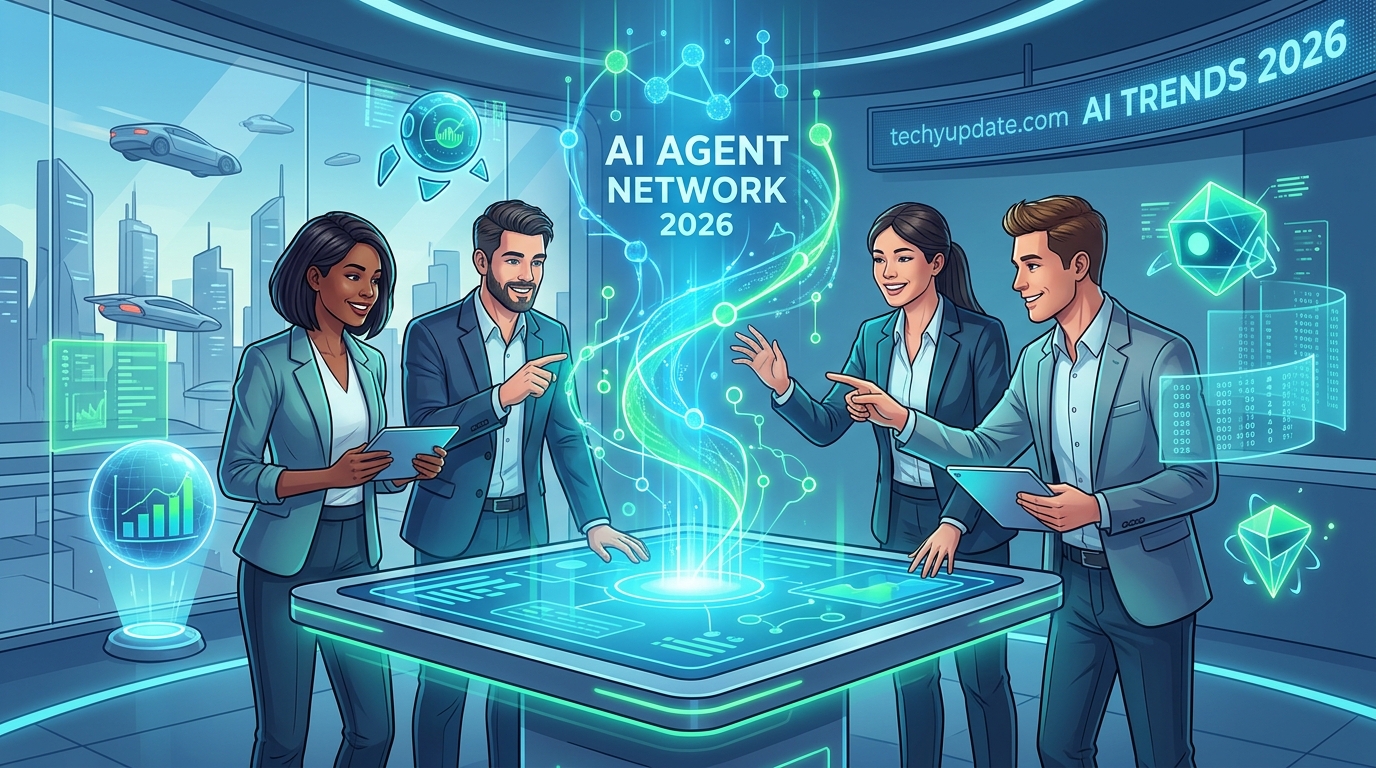
Artificial Intelligence (AI) continues to transform the way people live, work, and interact with technology. In 2026, AI is no longer limited to simple automation or virtual assistants; it has evolved into a powerful ecosystem of intelligent systems capable of reasoning, creating, analyzing, and making complex decisions.
From businesses and healthcare to education, cybersecurity, and entertainment, the latest AI technology trends are shaping the future at an unprecedented pace.
One of the biggest developments in 2026 is the rise of advanced generative AI, which allows machines to produce high-quality text, images, videos, software code, and digital experiences. AI agents are becoming more independent, helping users complete tasks, manage workflows, and solve problems with minimal human input. These intelligent systems are changing how companies operate and improving productivity across multiple industries.

Another important trend is the growth of personalized AI experiences. Modern AI tools can understand user preferences, behaviors, and needs to provide more accurate recommendations and solutions. Meanwhile, advancements in edge AI, robotics, and autonomous systems are bringing smarter technology closer to everyday life.
As AI adoption increases, topics such as AI security, ethical development, data privacy, and responsible use are becoming more important than ever. Organizations are focusing on creating transparent and trustworthy AI systems that benefit users while reducing potential risks.
Understanding the latest AI technology trends in 2026 is essential for businesses, professionals, and technology enthusiasts who want to stay competitive in a rapidly changing digital world. The future of AI promises greater innovation, efficiency, and opportunities across every sector.
Featured — Quick Answer
What are the latest AI technology trends in 2026? The latest AI technology trends in 2026 include agentic AI systems that operate autonomously across complex workflows, multimodal AI that simultaneously processes text, images, audio, and video, small language models (SLMs) that run on-device without cloud dependency, AI-powered scientific discovery accelerating drug development and materials science, real-time voice AI replacing traditional interfaces, and a global wave of AI governance regulation shaping how companies deploy these systems responsibly.
Table of Contents
Why 2026 Is a Turning Point for AI Technology
If you have been paying even casual attention to the technology world over the past few years, you already know that artificial intelligence has shifted from a niche research topic to the most consequential force reshaping industry, work, and daily life. But 2026 is different in a way that matters. This is not another year of incremental progress on language model benchmarks.
This is the year where AI technology stops being a laboratory curiosity and becomes operational infrastructure embedded in supply chains, government services, healthcare systems, creative studios, and the personal devices in your pocket.
The transition underway is best understood through a simple metaphor: the internet in the mid-1990s was technically impressive and obviously powerful, but most people were still figuring out what to do with it. That changed fast. AI in 2026 sits at roughly that same inflection point. The foundational models are here. The infrastructure is maturing. The question is no longer whether AI works, it is how deeply, how quickly, and on whose terms it integrates into the world.
What separates 2026’s AI technology landscape from what came before is a convergence of capabilities, cost reductions, and regulatory pressure arriving simultaneously. Foundation models have become dramatically cheaper to run thanks to more efficient training techniques and specialized inference hardware.
Open-source models have closed much of the gap with proprietary ones, distributing AI capability more broadly than at any previous point. And governments across the EU, the United States, China, and the UK are no longer merely discussing AI policy, they are enacting it.
For beginners, this article will give you a clear foundation for understanding where AI is headed. For intermediate and advanced practitioners, it maps the strategic landscape you need to navigate as these trends accelerate. The trends covered here are not predictions pulled from speculation they represent the convergence of verifiable developments happening across the world’s leading AI labs, technology companies, and research institutions right now.
Understanding them is no longer optional. It is the baseline for staying relevant in virtually any professional field.
Whether you are a developer evaluating which AI tools to build on, a business leader deciding where to invest, a student choosing a career direction, or simply someone who wants to understand the world changing around them, what follows is your most important technology briefing of 2026.
Agentic AI: The Rise of Autonomous Systems
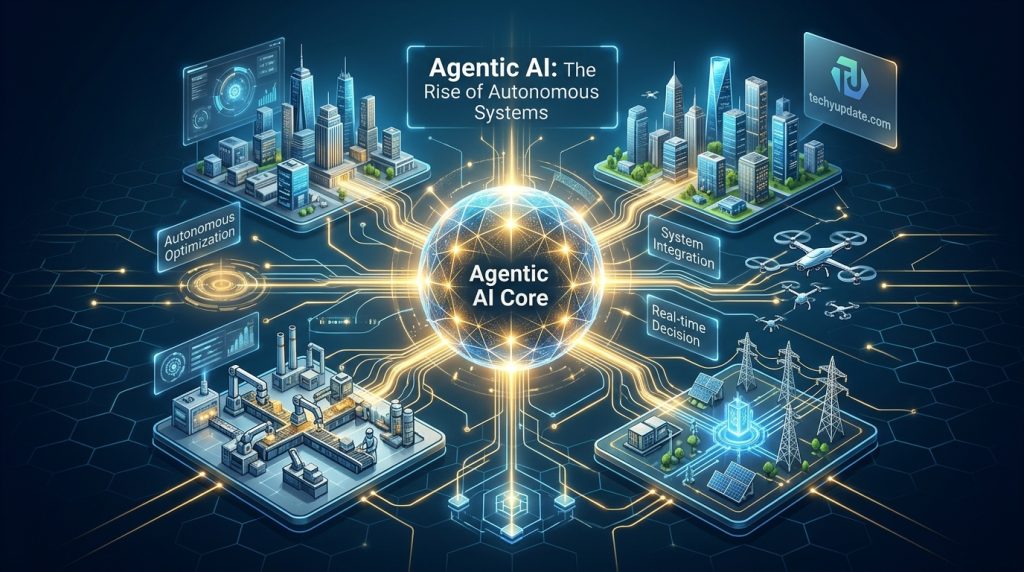
Agentic AI is, without question, the single most transformative AI technology trend of 2026. To understand why, you need to grasp the difference between a tool that answers questions and a system that takes actions. Until recently, most AI applications, including large language models, were fundamentally reactive. You gave them input, and they produced output. The interaction ended there. Agentic AI breaks that pattern entirely.
An AI agent is a system that perceives its environment, sets goals, makes multi-step decisions, uses tools, calls external APIs, executes code, browses the web, manages files, and iterates on its own outputs, all without requiring a human to supervise every individual step. The shift from “AI as assistant” to “AI as agent” is the difference between having a very smart calculator and having a capable colleague who can complete a project on your behalf.
In 2026, agentic frameworks have matured significantly. Companies across industries are deploying agents that handle tasks like processing insurance claims end-to-end, managing procurement workflows, drafting and filing regulatory documents, monitoring infrastructure and triggering remediation, running A/B tests and optimizing ad campaigns in real time, and onboarding new software customers without human intervention. The economic implications are enormous.
How AI Agents Actually Work
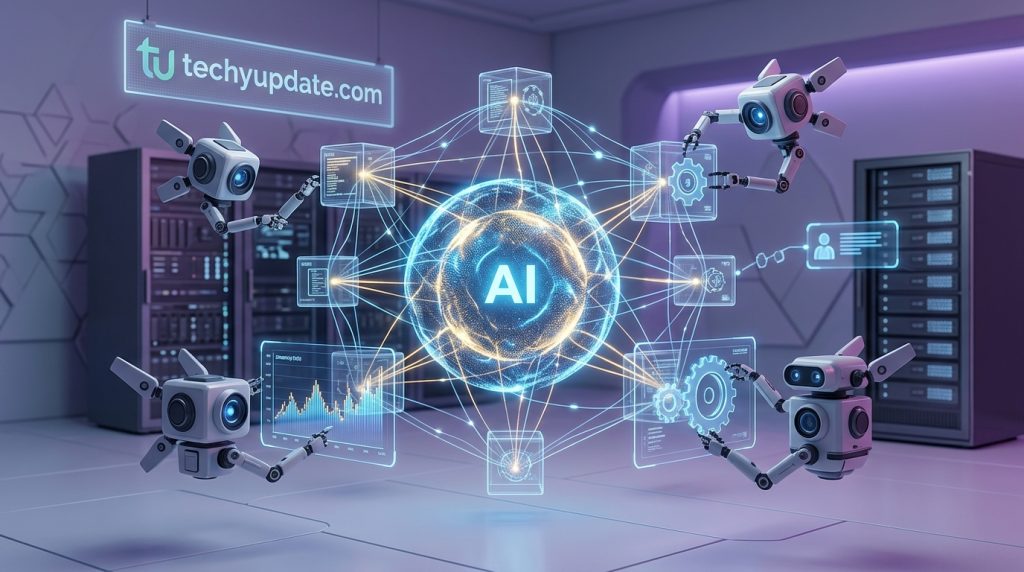
Understanding the mechanics of agentic AI helps separate the genuine capability from the hype. At their core, modern AI agents combine a foundation model (which provides reasoning and language capability) with a set of tools (search, code execution, API calls, memory systems), a planning layer (which breaks goals into sub-tasks), and a feedback loop (which evaluates progress and adjusts).
The agent autonomously orchestrates these components, deciding which tool to use, when to call it, and how to interpret the result.
Multi-agent systems take this further by deploying specialized agents, one for research, one for writing, one for quality checking, that communicate with each other to complete complex workflows. Think of it as an AI-native organization chart.
These systems can tackle tasks that would take a human team days or weeks to complete, doing so in minutes while maintaining a detailed log of every decision made.
The challenge agentic AI introduces is one of control and reliability. When an agent has the ability to send emails, execute code, or make purchases, errors compound in ways that a static chatbot never could. The industry’s response has been to develop guardrails, human-in-the-loop checkpoints for high-stakes decisions, and agent evaluation frameworks that test behavior before deployment.
This is an active and rapidly evolving area, and the teams building the most trustworthy agentic systems are those investing as much in safety infrastructure as in capability.
Real-World Agentic Deployments in 2026
The most visible agentic AI deployments right now span software engineering (agents that write, test, and deploy code with minimal human input), legal document analysis, financial modeling, customer support that resolves complex cases rather than just routing tickets, and scientific research where agents design experiments and analyze results.
The productivity gains reported by early adopters are not marginal; many teams are compressing multi-day workflows into hours, which has begun to reshape headcount decisions and org structures at technology-forward companies.
Multimodal AI When Machines See, Hear, and Understand
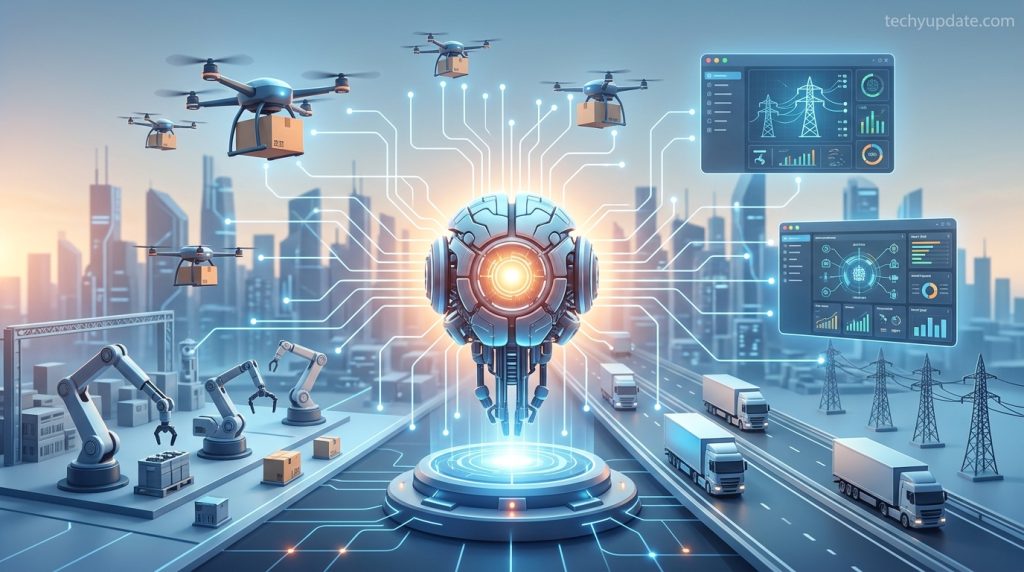
Multimodal AI refers to systems that can process, understand, and generate content across multiple types of data simultaneously, such as text, images, audio, video, code, and structured data, within a single unified model. This is one of the most practically significant latest AI technology trends because it mirrors the way humans actually perceive and interact with the world. We do not experience reality through a single sense; neither should the AI systems we use.
The earlier generation of AI tools was largely siloed. Language models handled text. Computer vision models handled images. Speech recognition systems handled audio. Each was powerful in its domain, but using them together required complex pipelines, data formatting gymnastics, and significant engineering overhead. Multimodal AI collapses these silos into a single system that handles the full richness of real-world input.
In 2026, multimodal models are being used to analyze medical imaging alongside patient records and physician notes in a single query. Architects are uploading building photos, floor plan images, and written briefs to get an AI analysis that spans all three simultaneously.
Retailers are using multimodal AI to analyze product images, customer reviews, and sales data together to generate merchandising recommendations. Content creators are generating videos from written scripts with AI that understands narrative structure and visual composition simultaneously.
Video Understanding as the New Frontier
If text was the first frontier of large language models and images were the second, video is the frontier being most aggressively conquered in 2026. Video is the richest and most complex data type, and the ability to analyze, summarize, generate, and interact with video content opens applications that simply were not possible before. From security camera footage analysis to automated sports highlights to AI-generated educational video content, video-capable multimodal models are creating entirely new product categories.
The technical challenges of video AI managing temporal context across frames, understanding motion and causality, generating consistent characters and scenes across sequences are substantial, but the leading models have made dramatic progress. The computational cost remains high, but is falling rapidly as inference hardware improves.
Small Language Models and On-Device AI
One of the most counterintuitive AI technology trends of 2026 is the rise of smaller models as a strategic priority, even as the largest models continue to grow in capability. Small Language Models (SLMs) models with parameter counts in the range of 1 billion to 13 billion, rather than the hundreds of billions found in frontier models, are proving that bigger is not always better when the goal is practical deployment.
The driving force behind SLM adoption is the combination of privacy requirements, latency needs, connectivity constraints, and cost economics that make cloud-dependent large models impractical for many real-world applications. A hospital that cannot send patient data to a third-party server, a manufacturing plant with limited connectivity, a mobile application that needs to respond in milliseconds regardless of network conditions, all of these use cases demand on-device intelligence.

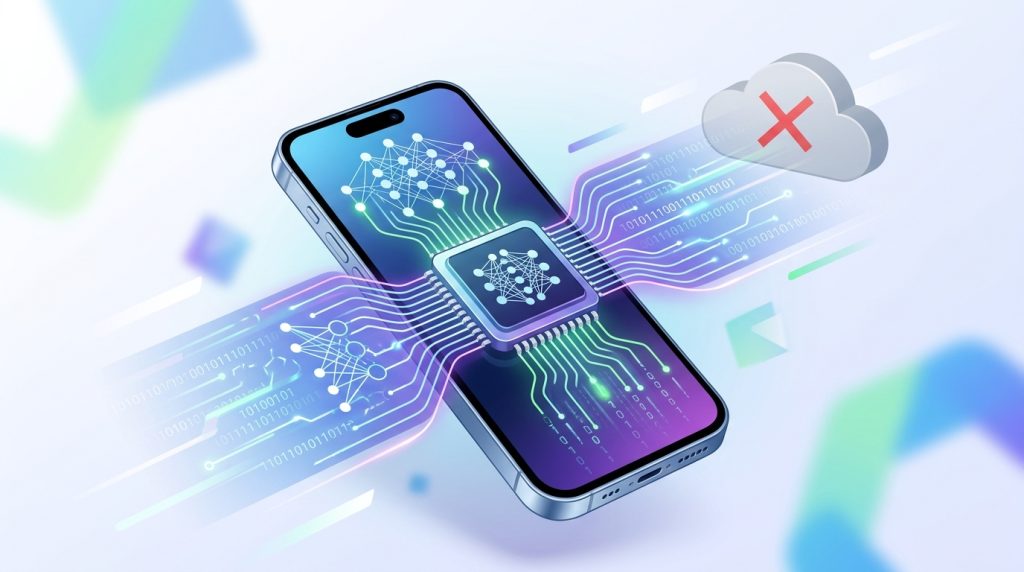
Why On-Device AI Changes Everything
When AI runs directly on a device, a smartphone, a laptop, an industrial sensor, or an automobile, the implications go beyond just technical performance. Privacy improves dramatically because sensitive data never leaves the hardware. Latency drops to near zero because there is no network round-trip. Reliability increases because the system works offline. And the cost structure changes because there are no per-query API fees.
For consumer electronics manufacturers, automotive companies, and enterprise device managers, on-device AI is not a nice-to-have it is becoming a table-stakes requirement.
The rapid advancement of mobile chipsets with dedicated neural processing units (NPUs) has made on-device AI genuinely viable in 2026 in a way it was not even two years ago. Apple’s latest silicon, Qualcomm’s Snapdragon platform, and MediaTek’s Dimensity series all include NPU capability that can run capable language and vision models at real-time speeds without draining the battery in minutes.
AI in Scientific Discovery and Healthcare
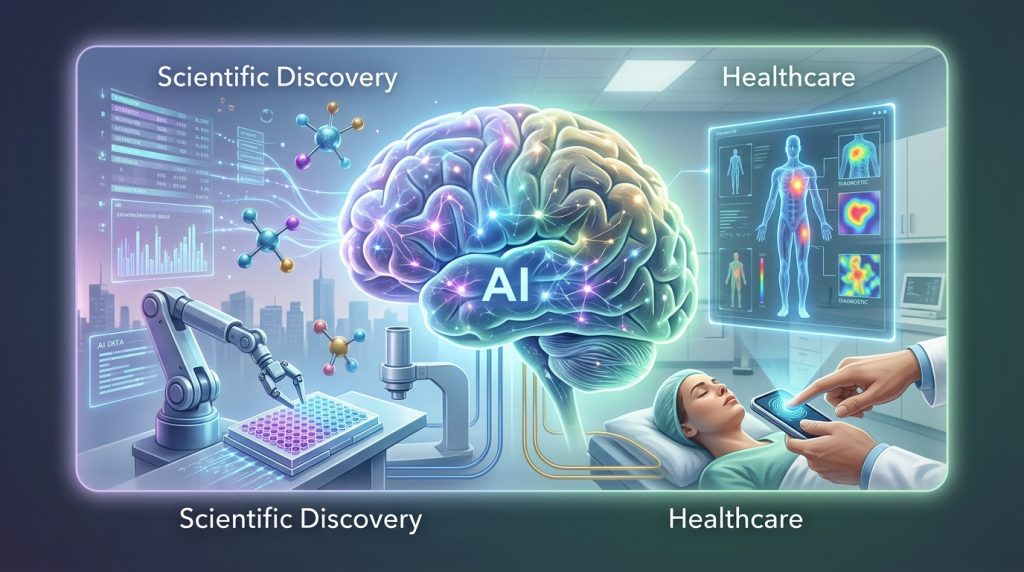
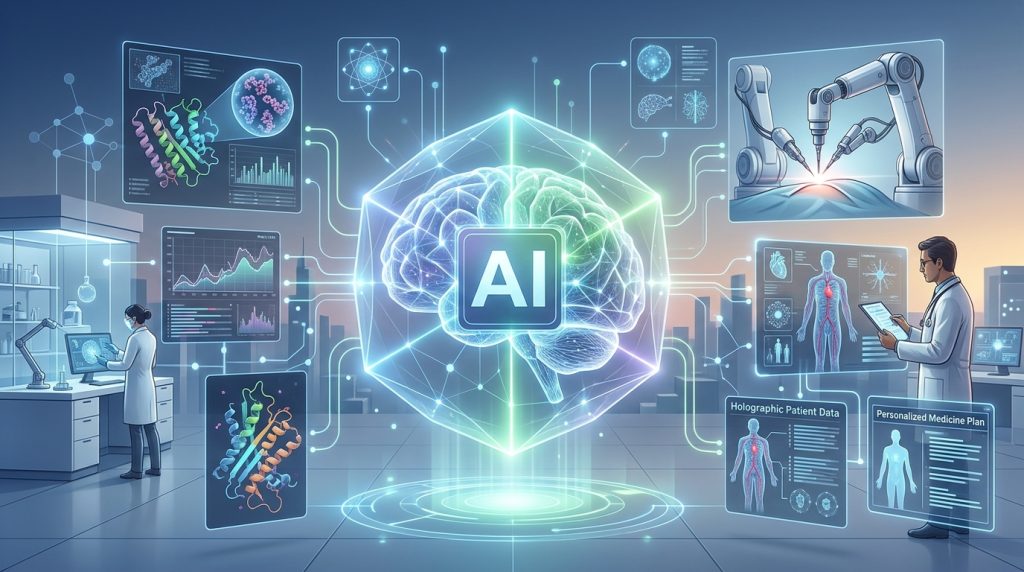
The application of AI technology to scientific research and healthcare represents one of the most consequential and least discussed AI trends of 2026. While the popular conversation about AI focuses heavily on chatbots, code generation, and creative content, the most durable and transformative impact of this technology generation may well be in how we discover new drugs, understand disease, develop new materials, and accelerate the pace of scientific knowledge.
The watershed moment that signaled this shift was the success of AI in protein structure prediction, which cracked a problem that had stumped biologists for 50 years. That was the proof of concept. What is happening in 2026 is the industrialization of AI-driven discovery across a much broader range of scientific domains, such as materials science, climate modeling, drug design, genomics, particle physics, and chemistry.
In pharmaceutical development, AI is compressing the early-stage drug discovery timeline from years to months. Systems trained on vast libraries of molecular structures, clinical trial results, and biological pathway data are generating drug candidates with predicted efficacy and safety profiles before a single wet-lab experiment is run.
This does not eliminate lab work, it radically prioritizes it, ensuring that when scientists run experiments, they test the most promising candidates rather than exploring at random.
AI in Clinical Healthcare
In clinical settings, AI technology is being deployed across diagnostic imaging, early warning systems in intensive care, clinical documentation, surgical assistance, and patient triage. Radiology AI that can detect early-stage cancers in imaging scans with accuracy that matches or exceeds that of radiologists is no longer experimental it is being deployed in hospitals across Europe, Asia, and North America.
The integration of AI into electronic health records is enabling a new generation of clinical decision support tools that surface relevant research, flag drug interactions, suggest differential diagnoses, and flag at-risk patients before crises develop.
The administrative burden reduction alone, AI handling documentation that currently consumes roughly 30 to 40 percent of a physician’s working hours, could have a significant impact on both healthcare quality and clinician wellbeing.
Real-Time Voice AI and Conversational Interfaces
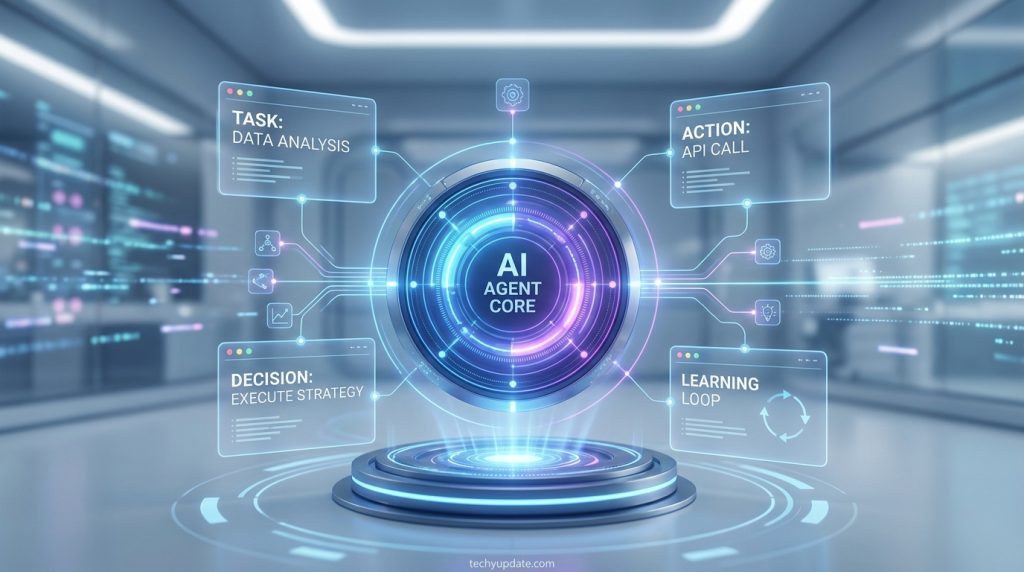
Voice has been a promised frontier of AI technology for decades, with results that ranged from moderately useful to deeply frustrating. The robotic cadence, the missed context, and the inability to handle anything outside a narrow command set have defined voice AI for most of its history. In 2026, that characterization is obsolete.
Real-time voice AI in 2026 is not the voice assistant of 2019. Modern voice AI systems understand natural speech with all its imperfections, accents, interruptions, background noise, implied meaning, and emotional subtext. They respond with natural prosody and rhythm. They maintain context across extended conversations.
And, critically, they can take real actions, booking appointments, querying databases, controlling software, and seamlessly escalating to humans when appropriate.
The latency breakthrough has been particularly significant. Earlier voice AI systems introduced noticeable pauses while audio was transcribed, sent to a cloud server, processed, and returned. End-to-end neural voice models that process audio directly without converting it to text as an intermediate step have brought response latency down to the range of human conversation, eliminating the awkward rhythm that made earlier systems feel robotic.
Enterprise and Consumer Applications
In contact centers, real-time voice AI is handling a growing share of customer interactions, with resolution rates that, in many categories, exceed those of human agents, not because the AI is more knowledgeable in every situation, but because it is more consistent, available around the clock, and never frustrated. In healthcare, voice AI is being used for patient intake, medication reminders, and mental health check-ins at a scale that human staff simply could not achieve.
In accessibility, real-time voice interfaces are dramatically expanding how people with visual impairments, motor disabilities, or low digital literacy can interact with technology.
AI Governance, Ethics, and Global Regulation
No serious overview of the latest AI technology trends in 2026 is complete without examining the regulatory and governance landscape that is now actively shaping how AI technology can be built and deployed. For years, AI development operated in a largely unregulated environment where technical progress set the pace and policy struggled to keep up. That era is ending.
The European Union’s AI Act is now in active enforcement, creating a tiered risk classification system that imposes stringent requirements on high-risk AI applications — including those used in healthcare, law enforcement, employment, critical infrastructure, and credit scoring. Companies deploying AI in these domains in the EU must demonstrate conformity assessments, maintain technical documentation, ensure human oversight for consequential decisions, and register their systems in a public database. Non-compliance carries fines structured on global annual revenue, creating real financial risk.
The United States has moved from a primarily executive-action framework to legislative momentum at both federal and state levels, with particular focus on AI transparency requirements, algorithmic accountability in hiring and financial decisions, and national security restrictions on AI in sensitive technology transfers. China continues to develop its own comprehensive AI governance framework, emphasizing data sovereignty and traceability requirements for AI systems.
What Responsible AI Deployment Looks Like in Practice
For organizations deploying AI technology in 2026, governance is not an abstract compliance checkbox it is a strategic capability. The companies doing this well are building internal AI governance functions that maintain model cards, conduct bias audits, track data provenance, define human-review thresholds, and establish clear accountability chains.
They are investing in explainability tools that can articulate why an AI system made a particular recommendation, because regulators and affected individuals increasingly have the right to ask that question.
The trustworthiness dimension of AI governance has also become a competitive differentiator. Organizations that can demonstrate responsible, auditable AI deployment are winning procurement decisions, attracting talent, and building consumer trust in ways that companies with a “move fast and figure out compliance later” approach are not.
AI and Cybersecurity: Threat and Defense

The relationship between AI technology and cybersecurity in 2026 is the most consequential bilateral dynamic in the technology landscape. AI is simultaneously the most powerful tool available to security defenders and the most dangerous capability available to attackers, and both sides are deploying it aggressively.
On the threat side, AI has dramatically lowered the skill barrier for conducting sophisticated cyberattacks. Phishing emails generated by AI language models are now largely indistinguishable from legitimate communication, making social engineering attacks more effective and harder to train users to detect.
AI-assisted vulnerability discovery is enabling attackers to find and exploit software weaknesses faster than security teams can patch them. Deepfake audio and video generated by AI are being used in business email compromise schemes and political disinformation campaigns.
AI-generated malware that mutates its own code to evade signature-based detection represents a particularly serious development, as it fundamentally challenges the detection paradigm on which most endpoint security products have been built.
AI-Powered Defense Capabilities
The defensive applications of AI in cybersecurity are equally significant, however. AI-driven threat detection systems that analyze network behavior, user activity, and system telemetry can identify anomalies indicating compromise far faster than human security analysts can by reviewing logs manually.

The pattern-recognition capability of large models trained on threat intelligence data enables defenders to correlate signals across enormous volumes of data and surface only the genuine threats that require human attention.
Automated incident response, where AI systems not only detect threats but trigger containment actions, isolate affected systems, preserve forensic evidence, and begin remediation, is becoming standard in mature security operations centers. The speed advantage this provides over manual response is critical when ransomware can encrypt an entire enterprise in under two hours.
2026 AI Technology Comparison Table
| AI Trend | Maturity Level | Primary Use Cases | Key Challenges | Business Impact |
|---|---|---|---|---|
| Agentic AI | Early Mainstream | Workflow automation, software development, research | Reliability, error compounding, and control | Very High |
| Multimodal AI | Mainstream | Healthcare imaging, content creation, retail analytics | Compute cost, hallucination in vision | High |
| Small Language Models | Mainstream | On-device apps, edge AI, privacy-sensitive use cases | Capability gap vs large models | High |
| AI in Science & Health | Growth Stage | Drug discovery, diagnostics, clinical documentation | Regulatory approval, data access | Transformative |
| Real-Time Voice AI | Mainstream | Contact centers, accessibility, enterprise assistants | Accent handling, ambient noise | High |
| AI Governance & Regulation | Active Enforcement | Compliance, risk management, auditing | Cross-border fragmentation | Significant |
| AI in Cybersecurity | Mainstream | Threat detection, incident response, vulnerability analysis | Adversarial AI arms race | Critical |
What These Trends Mean for You
Understanding the latest AI technology trends is valuable, but only if it translates into decisions and actions. Whether you are an individual professional, a business leader, or a student mapping your future, the trends in this article have direct and near-term implications for how you should be thinking and acting.
For professionals in any field, the most important reframe is this: AI technology is not replacing human professionals it is replacing professionals who do not know how to work with AI.
The people who will thrive in every industry over the next five years are those who develop genuine fluency with AI tools, understand their limitations, and can identify where human judgment remains irreplaceable. That fluency is a learnable skill, and 2026 is the year when developing it is urgent, not optional.
For businesses, the strategic question is no longer whether to invest in AI, but how to prioritize. The companies generating the most value from AI in 2026 are not those with the biggest AI budgets they are those with the clearest understanding of which specific workflows AI can improve, the organizational discipline to implement change management, and the governance infrastructure to deploy AI responsibly.
The technology advantage without the operational advantage delivers much less than its potential. For students and career changers, the AI technology landscape of 2026 is creating enormous demand for people who can bridge the gap between AI capability and domain expertise.
The AI-literate nurse, the AI-fluent lawyer, the software engineer who understands agentic systems, the supply chain manager who can evaluate AI vendor claims, these hybrid professionals are among the most valuable in the job market right now, and demand is significantly outpacing supply.
The pattern that connects all of the trends covered in this article is the acceleration of a longer-running shift: from AI as an exotic, specialized tool that requires PhDs to deploy, to AI as general-purpose infrastructure that thoughtful professionals in any field can leverage. The technology is not going to pause for anyone to catch up.
The competitive advantage in 2026 belongs to those who engage with it now, build genuine understanding, and make deliberate choices about how and where to integrate AI into their work and organizations.
FAQs
What is the most important AI technology trend in 2026?
Agentic AI is widely considered the most transformative trend of 2026 because it shifts AI from a reactive tool to an autonomous system capable of completing complex, multi-step workflows independently. This fundamentally changes how organizations structure work and where humans remain essential.
How is AI technology different in 2026 compared to 2023 or 2024?
The key differences in 2026 are the shift from single-turn interactions to autonomous agents, the maturation of multimodal capability across text, image, audio, and video, the widespread deployment of on-device AI through small language models, and the move from AI as an experimental tool to regulated operational infrastructure with active legal compliance requirements.
Are small AI models as capable as large ones?
Not across all tasks, but for many specific applications, they are competitive and they offer significant advantages in latency, privacy, cost, and offline operation. In 2026, the question is less about “which is better” and more about “which is appropriate for this specific use case.” A large cloud model and a small on-device model serve different purposes, and the best AI deployments often use both.
How is AI being regulated in 2026?
The EU’s AI Act is actively enforced, classifying AI applications by risk level and imposing specific technical and transparency requirements on high-risk deployments. The United States has a patchwork of federal and state-level legislation that is developing rapidly, particularly regarding AI in hiring, lending, and national security. China maintains its own domestic regulatory framework. Organizations deploying AI globally must navigate multiple overlapping compliance requirements.
What jobs are most affected by AI technology trends in 2026?
The most affected roles are those involving high-volume, rule-based cognitive tasks: data entry, basic legal and financial document review, customer service routing, first-level software debugging, and basic content production. However, AI is also creating new roles in AI oversight, prompt engineering, AI ethics and governance, model evaluation, and hybrid domain-expert-plus-AI-fluency positions that did not exist five years ago.
Is voice AI actually good enough to use in 2026?
Yes, in 2026, real-time voice AI has crossed the threshold of being genuinely useful for a broad range of applications. Latency is low enough to feel conversational, natural language understanding handles accents and imperfect speech reliably, and voice AI systems can take meaningful actions rather than just providing information. Consumer and enterprise adoption has accelerated significantly as a result.
How can a non-technical person start learning about AI technology?
Start with hands-on experimentation using publicly available AI tools, then layer on conceptual understanding of how large language models and AI agents work. Look for courses that prioritize practical application over mathematical theory. The most effective path for most non-technical professionals is to identify a specific workflow in their job and experiment with AI tools to see what actually helps learning by doing in a familiar context is far more effective than abstract study.
What is multimodal AI, and why does it matter?
Multimodal AI refers to systems that can process multiple types of data, text, images, audio, video, and code in a single integrated model rather than requiring separate specialized tools for each data type. It matters because most real-world information is multimodal. Medical cases involve images and text. Business analysis involves documents and data. Understanding the full richness of real-world input is what makes AI systems genuinely useful across complex domains.
Conclusion
The latest AI technology trends in 2026 highlight a future in which artificial intelligence becomes more intelligent, more personalized, and more deeply integrated into everyday life. From advanced generative AI and autonomous AI agents to robotics, edge computing, and smarter automation, these innovations are changing how individuals and businesses solve problems and create new opportunities.
As AI continues to evolve, organizations that understand and adopt these technologies will gain a competitive advantage in the digital world. However, responsible AI development, data security, and ethical practices will remain essential to ensure that these powerful tools are used safely and effectively.
The future of AI is focused on collaboration between humans and intelligent machines. Rather than replacing human creativity and decision-making, AI will continue to enhance productivity, innovation, and efficiency across different industries. Staying up to date with the latest AI technology trends in 2026 will help businesses, professionals, and technology enthusiasts prepare for the next era of digital transformation.
