
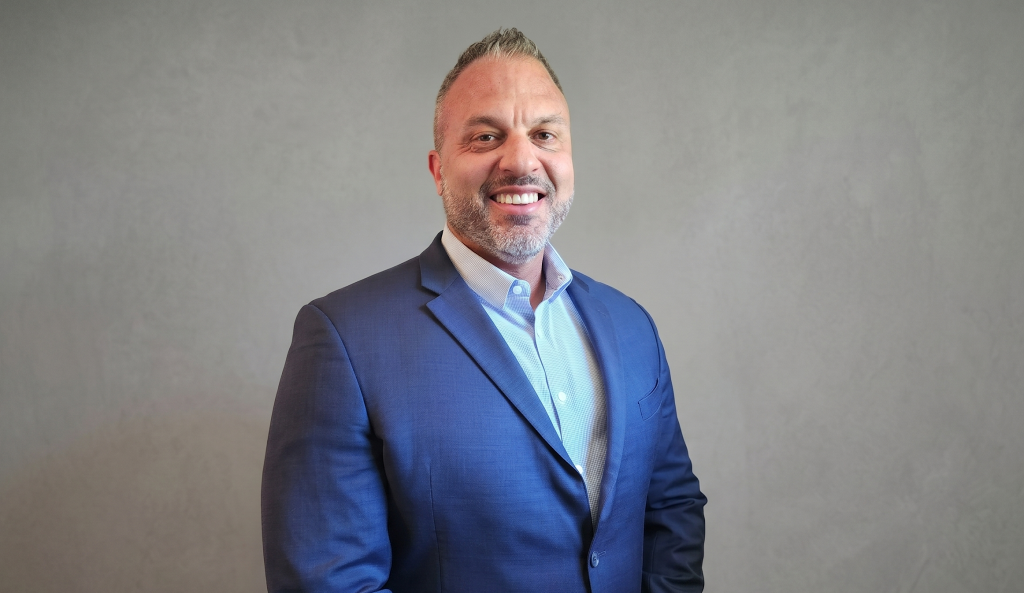
Few people have stepped into harder jobs than Brian O’Hara. A New Jersey kid from a blue-collar town outside Manhattan, he spent more than two decades in Newark working his way up from patrol officer to Director of Public Safety, then took on what many considered an impossible assignment: rebuilding another city’s police department in the wake of civil unrest in 2020. He inherited a department in freefall, a city on edge, and a level of public scrutiny that would have flattened most leaders.
Now, having launched his own consulting firm, O’Hara Leadership Group, he is turning hard-won experience into guidance for the next generation of public safety leaders. We sat down with him to talk about what drew him to the work, how he stabilized a department that had lost nearly half its officers, and what he has learned about leadership when the stakes could not be higher.
You started your career as a patrol officer in Newark in 2001 and rose to lead three different public safety organizations. What drew you to policing in the first place?
The reason I was drawn into policing in the first place is largely based on my upbringing. I grew up in Kearny, a blue-collar, northern New Jersey town about ten miles from Manhattan. My dad died when I was a kid, so my mom raised me. Making ends meet was constantly an issue, and I remember the struggles she and her friends went through as they talked about who from the neighborhood was laid off or couldn’t get a good job. I remember how they would talk about government jobs with pensions and benefits, and the stable employment that provided. That stayed with me as I got older, and the stability of the job, the pension, and the benefits is what initially attracted me to this career.
After more than two decades in Newark, you moved to lead the local police department in 2022. What made you decide to take on that role at such a pivotal moment for the department?
I had spent over 20 years as a police officer in Newark, New Jersey, which is a city that had been known for problems with serious street crime as well as poor police-community relations. Much of the work I had been doing over the latter part of my career focused on police reform, involving community in violence prevention and public safety, and working collaboratively with community organizations and law enforcement partners to drive down serious street crime and violence. We were largely successful in those efforts, and I believed the experience that I had in Newark, both personally and professionally over the course of my career, had made me uniquely qualified to step into that role. So while Newark and the city I moved to are vastly different, two of the greatest challenges the department was facing at the time—outrageous levels of crime and incredibly poor police-community relations—were directly comparable to my experiences in Newark. For those reasons, I believed I was uniquely qualified to lead the department out of the hopeless situation it was in.
Looking back on your time leading the police department, what accomplishment are you proudest of?
I am proudest of the results that were made during my tenure. I walked into what was a hopeless situation. The department was in freefall as hundreds of officers had left and dozens more were still leaving. For years, there weren’t sufficient new hires to stop the bleeding of people, and the department continued to get smaller—all the while serious street crime and violence was completely out of hand, and a sense of apathy came over many in the department and in the public. It was as if the violence was being normalized. By the time my term ended, there was a dramatic turnaround. Violent crime had decreased significantly, the department was rebuilding and was more diverse than it ever had before, and community voices were vocal and clearly more supportive of the police. It had gone from a situation that was literally hopeless into one that showed evidence of progress and promise for the future.
You took over a department that had lost roughly 40% of its sworn personnel after 2020. How did you go about stabilizing it and rebuilding community trust?
For most of my term as chief, department staffing was 40% below what had been typical prior to 2020. At the same time, the caseloads and volume of serious street crime were at levels much higher than what had been typical for the city. The department was staffed with about 900 officers at the start of 2020. While I was chief, over 500 of those officers were gone. So it wasn’t just about the depleted ranks, it was also centuries of experience that had been lost. When I took over the department, I knew the situation was dire and we needed to get back to the basics and focus on what was most important: our most basic mission. I communicated that to the community and to the cops as three pillars. We were here to reduce serious crime; to do so in ways that build community trust; and to rebuild and restore pride in the department. I focused on driving a sense of urgency to respond to violence and community complaints, I sought to reward officers that were working hard and building trust, and I made sure we were driving efforts to rebuild staffing. Some of those were bureaucratic, but a lot of it was making sure everyone understood the urgency of the situation and need for constant follow-up.
How do you think about police reform, given your work on consent decrees?
I think as our country has become increasingly polarized, policing itself has also become too politicized. Too often, people view being tough on crime as being on the opposite end of the spectrum from prioritizing constitutional rights. The reality is the only way to be able to reduce serious street crime and sustain those reductions is if you are policing in a way that earns the confidence and support of the community. If you are using heavy-handed tactics, or overpolicing in a way that is perceived as petty or casting too broad a net, you’re likely to alienate residents and build resentment for police and the system. That results in fewer people being willing to tell the cops what’s going on in their neighborhood no matter how high crime is; it also means fewer people willing to cooperate with investigations. Sometimes people lose sight that ultimately reform should be about organizational improvement, which is something every agency needs to think about, and is a constant that will never be completed.
What qualities do you believe are essential for effective law enforcement leadership today?
I think the most essential quality for an effective law enforcement leader is one that is too often overlooked the higher the position of leadership is. And I heard it over and over again from the officers that were still dealing with the hurt and trauma of 2020. They perceived leadership as not being present enough with them, and therefore, not sufficiently caring about them. I heard it over and over again, and I’ve seen it come up in various ways, but leaders need to be present. Presence is powerful. People want to see their leaders come around and be present in the neighborhood, at the stationhouse, or just passing through. And that’s when things are typical, and operating normally. In a crisis, in an emergency, people need you to be seen and be present. They need not only to see that someone in charge is there and has things under control, but they want to know that you’re there with them as they go through crisis, and probably most importantly, that you care about them.
What advice would you give to a new chief stepping into a department in crisis?
It is difficult to be an outsider coming into a department, let alone an outsider coming into a department in crisis. There will likely be a lot of pressure to make changes because of the crisis, but I would advise a new chief to not make any abrupt or premature changes, but to try to listen to as many different perspectives as possible. People will expect action, and you will need to make changes, but be sure that you are taking as much in as possible, and taking it all in with a grain of salt as people will have relationships and political alliances that may not be visible to you. Lastly, if you’re entering into an organization in crisis, be sure to be on the lookout for what is working well and not just what’s broken. It’s too easy to focus on making change—because that’s where the pressure is—but you need to be very cautious not to inadvertently break something that is working well, all in the name of making change.
What advice would you give your younger self, back when you were a patrol officer in Newark?
Some advice I would give my younger self as a patrol officer in Newark would be to take more time to enjoy those moments on the job as much as possible. So much of my career has been constantly preparing for the next thing, whether it’s a promotional exam or another professional opportunity, that you don’t appreciate the present moments as much as you should. So many cops I have known, after a point in their careers, constantly talk about how they can’t wait to retire; and the cops who are retired spend all their time talking about when they were on the job. Take time to enjoy the present—and this last part is probably much easier for the generation after mine since smartphones are ubiquitous—make sure you take lots of photos to remember that time.
Across the conversation, a consistent thread emerges: O’Hara’s belief that real progress, whether in fighting crime or rebuilding an organization, depends on trust, presence, and a willingness to do the unglamorous work of follow-through. Having steered one of the country’s most scrutinized departments from crisis toward stability, he now brings that perspective to the leaders and organizations he advises through O’Hara Leadership.
It is a fitting next chapter for someone who has spent his career stepping toward problems others would rather avoid—and who still sees the work of public safety as fundamentally about people.
Follow Brian O’Hara’s Journey
