
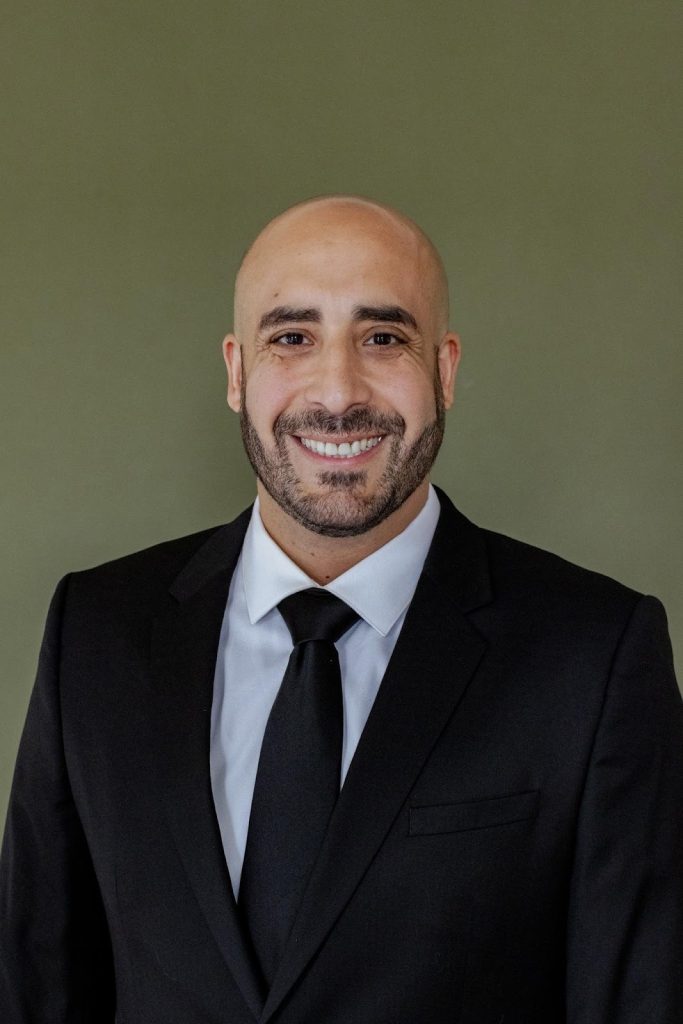
Dr. Omar Marar understands that medicine is both science and art. For surgeons working in complex and sensitive specialties, success depends on technical skill combined with the ability to trust and meet patients with empathy through clear communication. Few areas of medicine illustrate this balance like colon and rectal surgery, where clinical precision must often pair with thoughtful, compassionate patient care.
As a colon and rectal surgeon in Saginaw, Michigan, Dr. Marar has built a career that bridges surgical practice, medical education, and research focused on improving patient outcomes.
Board-certified in both General Surgery and Colon and Rectal Surgery, he has been recognized for his clinical expertise as well as his dedication to mentoring future physicians. His commitment to teaching earned him the 2021 Dr. Debasish and Chinu Mridha Spirit of Teaching Award.
Dr. Marar’s path to medicine was built on early curiosity and a deep commitment to patient-centered care. His training journey, spanning the Royal College of Surgeons in Ireland to his fellowship at Thomas Jefferson University Hospital and residency at St. Barnabas Medical Center, shaped his perspective on surgery, communication, and the physician-patient relationship.
In this Q&A, Dr. Omar Marar shares his thoughts on empathy in medicine, the systemic challenges facing healthcare today, and how physicians can build trust with patients in an era defined by information overload.
Q: What first inspired you to pursue a career in medicine?
Dr. Omar Marar: My interest in science and particularly the intricacies of the human body started at a very young age. It is difficult for me to pinpoint exactly why I was drawn to it, but I remember reading anatomy books as a child and being fascinated with the different systems and their integration in the human body. Medicine, particularly surgery, combines science, humanities, and technology in a way that no other discipline does. While I do believe that someone can choose to pursue medicine later in life, I had made the decision very early on in my education.
Q: Can you describe the early experiences that shaped your approach to patient care?
Dr. Omar Marar: When practicing surgery, particularly Colon and Rectal Surgery, there is a large subset of patients that feel embarrassed regarding their ailments and find them difficult to talk about. This is unique to this field. Empathy is not taught in school, and neither are the social skills required to make a patient feel comfortable and eliminate their embarrassment. As a result of this, I specifically focused on breaking that barrier and put effort into making patients feel comfortable with me before proceeding with any kind of treatment. I have learned that the patient physician relationship is extremely important to the patient, particularly cultivating comfort and trust.
Q: In your view, what are the most important qualities a physician should cultivate beyond clinical expertise?
Dr. Omar Marar: Humility and Empathy. I have seen many practitioners too proud to admit a mistake or accept that a complication is occurring. Unfortunately, complications are an unavoidable part of Surgery, and it is extremely important to accept that fallibility in order to recognize and treat complications early. Another important quality is empathy. Throughout a physician’s career, they will encounter multiple patients who have unfavorable prognoses and are past the ability to be cured. A common defense mechanism is to become callous, although it is difficult, it is important to maintain empathy and compassion.
Q: How do you build trust with patients in an era of information overload and online medical advice?
Dr. Omar Marar: The problem of information overload is particularly difficult in medicine. Particularly since any one symptom can have a long differential diagnosis that can overwhelm patients, especially if they do not have the appropriate medical background. A key way to combat this is to explain to the patient their diagnosis, work up, and management plan in a way that is easily digestible without any medical terminology. If the patient understands the physician better than they understand online content, they will place their trust in the physician.
Q: What systemic challenges in healthcare concern you the most right now?
Dr. Omar Marar: The biggest challenge facing healthcare at the moment are cost and understaffing. With regards to cost, the lack of price transparency and difficulty in obtaining affordable insurance lead to significant financial strain on patients. This is a difficult problem without an easy solution, but it is certainly one that will have to be addressed.
Q: What does effective collaboration between physicians and administrators look like?
Dr. Omar Marar: There is frequently conflict between administrators and physicians, due to our varying priorities and roles. A physician’s primary focus is patient care, which unfortunately may conflict with hospital bureaucracy. An administrator’s role is equally important in ensuring that the system functions efficiently and in a sustainable manner. A liaison that understands both positions allows for effective collaboration, otherwise we tend to be speaking to each other in different languages. Mutual empathy on both sides, as well as a balanced liaison can help solve this conflict.
Q: If you could change one aspect of the healthcare system immediately, what would it be?
Dr. Omar Marar: Although this is difficult to implement due to patient privacy concerns, a change that I believe would be extremely helpful is a universal medical record. The electronic medical record was a major revolution in compiling patient data, allowing patients to quickly and easily access medical records such as notes, lab and radiology results, pathology results…etc. However, there are multiple health care systems that use their own electronic medical record, which leads to fragmentation in patient data. I believe that a universal patient medical record, that includes all pertinent information, and can be accessed from anywhere, would help physicians take better care of patients and avoid errors.
Q: How do you maintain balance while working in a high-pressure profession?
Dr. Omar Marar: Throughout residency and training, it is extremely common for trainees to neglect their physical and mental well-being to keep up with the work. This pattern of behavior can spill over to practicing physicians. Although it seems selfless and altruistic, neglecting one’s mental and physical wellbeing does not lead to better outcomes, on the contrary, it leads to burn out. I have learned that adequate sleep, a healthy diet, exercise, and having some time to pursue hobbies outside of work makes me more effective in my profession.
Follow Dr. Omar Marar’s Journey
Who is Dr. Omar Marar?
Dr. Omar Marar is a board-certified colon and rectal surgeon and assistant professor at Central Michigan University Health in Saginaw, Michigan. Since 2018, he has combined clinical practice with medical education, serving as the general surgery sub-internship clerkship director while mentoring future physicians.
Dr. Marar completed his fellowship in Colon and Rectal Surgery at Thomas Jefferson University Hospital and his General Surgery residency at St. Barnabas Medical Center. Recognized for his commitment to teaching and patient care, he received the 2021 Dr. Debasish and Chinu Mridha Spirit of Teaching Award. His academic publications and research continue to contribute to advancements in colorectal surgery and surgical oncology.
