
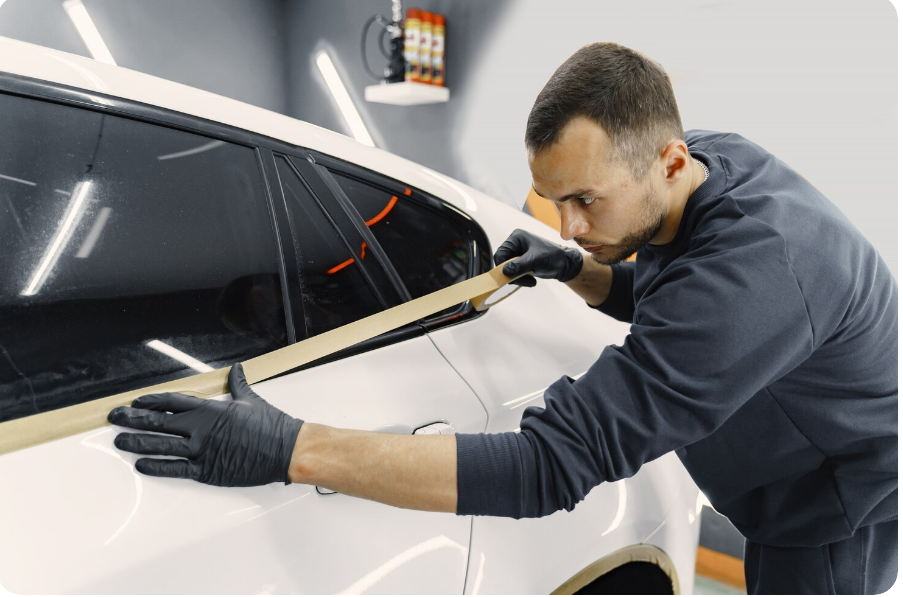
A rock kicked up on the 401 last month and left a chip the size of a dime right on your hood. You got it touched up, but it never looked quite right. That one chip probably bugged you more than it should have. And now every time you park in a gravel lot or follow a dump truck too closely, you flinch a little. That’s usually the moment people start looking into paint protection film.
PPF is a clear thermoplastic urethane layer that sits on top of your factory paint. It absorbs rock chips, blocks UV damage, and fights off bird droppings, tree sap, and road salt before any of it touches the actual finish. Finding a PPF shop in Toronto that does clean installs isn’t hard, but finding one that does the job right the first time takes a little homework. The city has dozens of shops, and the quality gap between them is wider than you’d think.
Colibri Car Wrap and Detailing on Mulock Avenue near the Stockyards has been installing PPF for over 20 years. Their technicians are certified, their reviews average 4.9 stars from 300+ clients, and they use film brands that back their products with real warranties. But no matter which shop you choose, these nine questions will help you separate the professionals from the amateurs.
1. What Brand of Film do you use?
Not all PPF is the same. Some brands yellow after a year. Others peel at the edges in cold weather. The big names in the industry are XPEL, 3M, SunTek, and Llumar. Each one offers multiple film grades with varying levels of clarity, self-healing ability, and warranty coverage.
Ask the shop which brand they install and why. If they can’t name the brand or they dodge the question, walk away. A shop that’s confident in its product will tell you the manufacturer, the specific product line, and what the warranty covers without hesitation.
2. Does the Film have Self-healing Properties?
Modern PPF from reputable brands has a top coat that self-heals when light scratches occur. Warm sunlight or a heat gun will smooth out minor scuffs on the surface. According to Hagerty, today’s automotive PPF is highly conformable and optically clear, with self-healing top coats that can maintain clarity for over a decade.
3. Will you Inspect my Paint before Installing?
This question matters more than people realize. If your paint has chips, rust, or a peeling clear coat, the film locks that damage underneath. It won’t fix what’s already there. A professional shop will inspect the paint first and let you know whether it needs correction before the installation begins.
4. How do you Cut the Film?
Computer-cut patterns use software that maps out panels for specific vehicle makes and models. The installer loads the pattern, a plotter cuts the film, and the film is applied to the car. The other method is bulk film, where the installer cuts and trims freehand directly on the vehicle.
Computer-cut patterns tend to be more consistent, reducing the risk of blade marks on your paint. Ask the shop which method they use and whether they’ve done your specific car before. Experience with your vehicle model matters because every body line and curve is different.
5. What Areas do you Recommend Covering?
A full front-end package usually includes the hood, front bumper, fenders, and mirror caps. That’s where most rock-chip damage occurs. Some shops also recommend door edges, rocker panels, the rear bumper lip, and behind the rear wheel arches.
For most daily drivers in Toronto, a front-end package handles 80% of the risk. Ask the shop what they recommend for your car and your driving habits. A commuter on the DVP has different needs than someone who only drives on weekends.
6. How long does Installation take?
A proper PPF install isn’t a same-day job. A full front-end takes one to two days, depending on the vehicle. Full body coverage can take three to five days. If a shop tells you they can do your whole front end in three hours, that’s a red flag.
The film needs time to be positioned, heated, stretched around curves, and tucked into panel gaps. Rushing the process leads to bubbles, lifted edges, and poor adhesion.
7. What’s the Warranty?
Most top-tier films carry warranties between five and ten years. Those warranties typically cover yellowing, cracking, peeling, and staining. But the warranty on the film itself is different from the warranty on the installation.
Some shops guarantee their labor for a separate period. Colibri Car Wrap and Detailing explains the warranty terms during the consultation so you know exactly what you’re covered for before work starts. Get the warranty in writing either way.
8. How should I care for the film after installation?
3M recommends waiting at least 72 hours after installation before washing the vehicle. After that, hand washing with a non-abrasive soap is the safest method. Brush car washes will dull the film and can lift the edges. Touchless washes are fine.
Bird droppings, bug splatter, and tree sap should be cleaned off quickly before they stain the film. In Toronto, road salt is a big concern during winter. Rinsing the car regularly between November and April prevents salt from working its way under the edges.
9. Can I see examples of your recent work?
Any shop worth visiting should have a portfolio. Photos, videos, or even cars currently in the shop that you can look at up close. Check the edges around headlights, mirror caps, and bumper curves. That’s where sloppy work shows up first.
But nothing replaces seeing the actual film on an actual car under real lighting. If a shop can’t show you recent installs, that’s a sign they either don’t do much volume or they don’t stand behind their work enough to document it.
Picking the Right PPF Shop in Toronto
A confident installer won’t dodge anything on this list. They’ll name their film brand, show you their work, explain the warranty, and tell you straight up if your paint needs fixing before the film goes on. Toronto roads are rough on cars. Between highway gravel, winter salt, and packed parking lots downtown, your paint takes a beating every single day. PPF won’t stop a shopping cart from denting your door, but it handles the small stuff that slowly turns a clean car into a tired-looking one. Take your time choosing a shop. Ask the questions. And don’t let price alone decide for you, because a bad install costs more to fix than a good one costs to get right.
